Water lines & fixtures
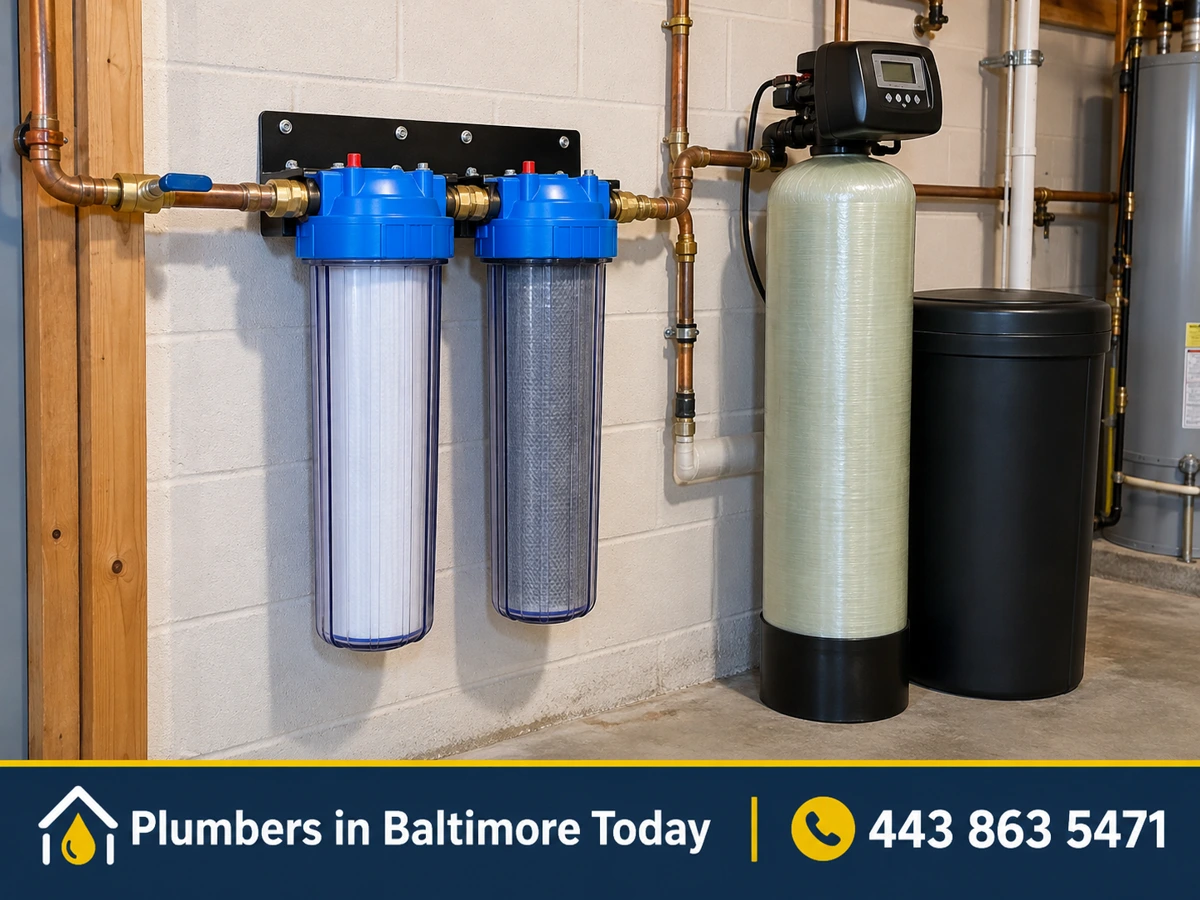
A water softener removes the calcium and magnesium that cause scale; a filter removes things like sediment, chlorine taste or iron. Start with a water test, not a product: check your utility's annual water quality report for hardness, or test a private well. A plumber then sizes the system and installs it on the main line with a bypass valve and a drain for regeneration.
Signs you have hard water
- White, chalky scale on faucets and showerheads
- Spots on dishes and glass shower doors
- Soap and shampoo that don't lather well
- A water heater or tankless unit that needs descaling more often
Do you need a water softener?
Public water and well water differ, so test first. If you're on public water, your utility publishes an annual water quality report (the Consumer Confidence Report) that lists hardness. Homes on private wells, common in Carroll County, Harford County and northern Baltimore County, should test their own water. A softener is also worth considering if you have a tankless water heater and hard water, because scale is the main cause of tankless problems.
How a water softener is installed
- On the main line after the meter (or well pressure tank) and before the water heater
- With a bypass valve, so water still flows during service
- With a drain line for regeneration to a floor drain, laundry sink or standpipe, with an air gap
- Near an outlet for the control head
Some owners leave the kitchen cold tap unsoftened for drinking and cooking. Salt-free "conditioners" reduce scale buildup but don't technically soften water; ask the plumber which suits your test results.
City water vs well water
Most homes in Baltimore City and the inner suburbs are on public water, which is treated before it reaches you. Many homes in northern Baltimore County, Carroll County and Harford County rely on private wells, which the owner is responsible for testing and treating.
Filters and well treatment
- Under-sink filters for drinking water
- Whole-house sediment and carbon filters for taste, odor and sediment
- Well treatment such as UV disinfection or iron filters, chosen from test results
Lead and older plumbing
If your home has a lead service line or old solder, filtering alone may not be the full answer. Ask your water utility about testing, look for filters certified for lead reduction, and consider replacing the line.
How to get water softener installation and water filtration in Baltimore
- Call 443-863-5471. Tell us what's happening and where you are. Calls are answered 24/7.
- We connect you. You're put through to a licensed, independent local plumber who handles this kind of job in your area.
- Get a clear quote. The plumber explains the problem and the price before any work starts.
- You decide. Approve the work, and the plumber completes it with any permit your city or county requires.
Plumbers in Baltimore Today is a free referral service; we don't perform plumbing work ourselves. How it works.
Frequently asked questions
Does a water softener need a drain?
Yes. It periodically flushes brine to a drain, so it needs a floor drain, laundry sink or standpipe nearby, connected with an air gap.
Do I need a whole-house filter on city water?
Not necessarily. Many people only want better-tasting drinking water, which an under-sink filter handles. Whole-house systems make sense for sediment, scale or specific test results.
How often should a well be tested?
Many health departments recommend testing private wells at least once a year for bacteria, and periodically for other contaminants.