Water lines & fixtures
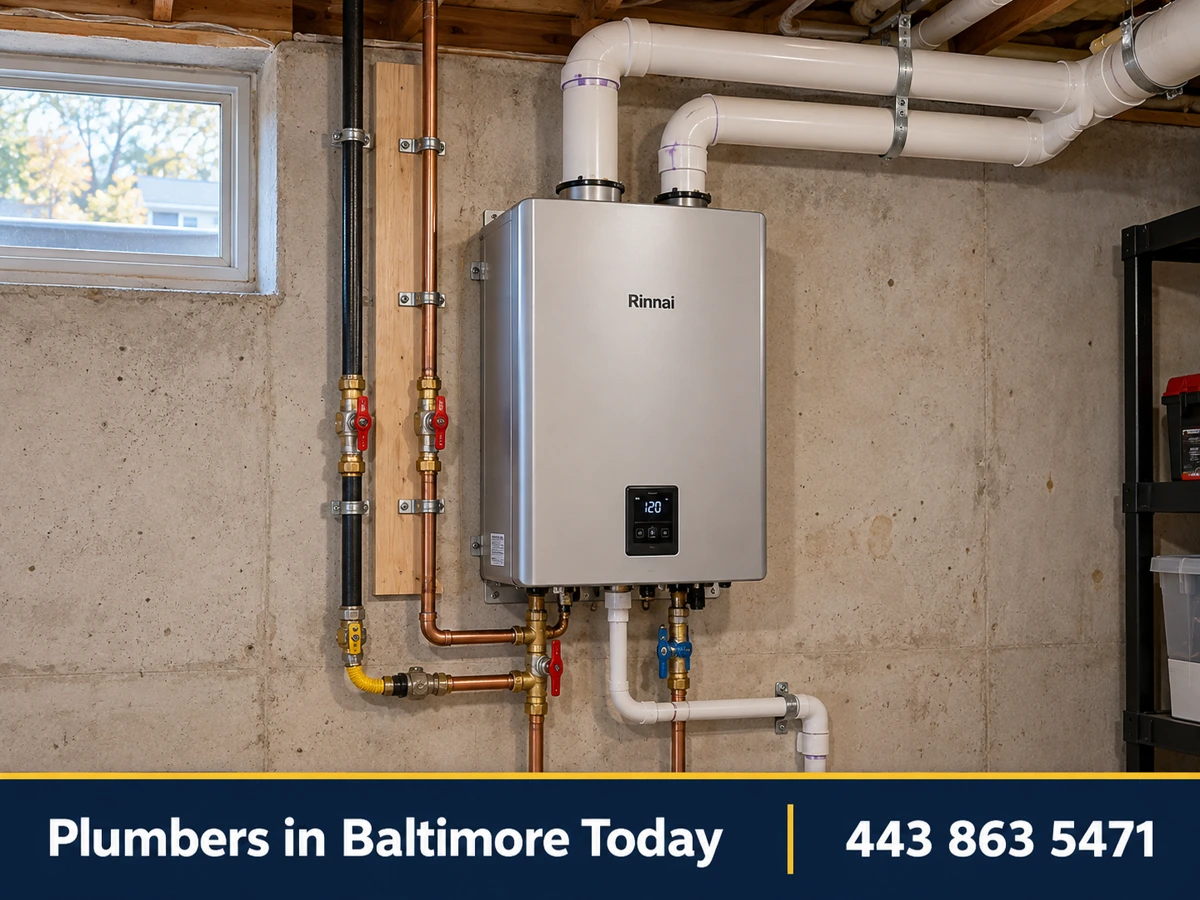
A tankless water heater heats water only when you use it, so it doesn't run out mid-shower. Converting from a tank usually means a larger gas line, new venting and a dedicated electrical outlet, so get a site visit and a written quote rather than a phone price.
Is tankless right for your home?
Tankless is a good fit if you want continuous hot water, need the floor space, or plan to stay in the house long enough to recover the higher upfront cost. It's less of a fit if your gas service is small, or if the only practical vent route is difficult, which can be the case in a mid-row rowhome.
What a conversion involves
- A larger gas supply line in many cases
- New venting, often PVC through a side or rear wall
- A 120-volt outlet for the unit's controls
- Isolation valves for future descaling
- A permit and inspection
Descaling and maintenance
Minerals build up inside the heat exchanger. Most manufacturers recommend flushing a tankless unit about once a year, more often with hard well water in parts of Carroll and Harford counties. Skipping it is a common cause of error codes and lukewarm water.
How to get tankless water heater installation in Baltimore
- Call 443-863-5471. Tell us what's happening and where you are. Calls are answered 24/7.
- We connect you. You're put through to a licensed, independent local plumber who handles this kind of job in your area.
- Get a clear quote. The plumber explains the problem and the price before any work starts.
- You decide. Approve the work, and the plumber completes it with any permit your city or county requires.
Plumbers in Baltimore Today is a free referral service; we don't perform plumbing work ourselves. How it works.
Frequently asked questions
Can a tankless heater run my whole house?
Yes, if it's sized for the number of fixtures you run at once. Large homes sometimes need two units.
Does tankless work during a power cut?
Most gas tankless units need electricity for their controls, so they stop during an outage unless you have backup power.